

I need something small and aesthetic to track my exercise, sleep and steps. I’ve been curious about smart rings for years, but wanted to wait until the technology was better established. Although I have a smart watch, I wanted something different. Also, I like how subtle smart rings are. It’s been a few months, so I can finally make an Oura Ring review.
At first, I bought a cheap knockoff on Amazon. Why spend $400 when I can spend $40? I really wanted to love it, but the problems started only a few months in. The ring kept disconnecting from my phone, the battery drained quickly, and it stopped holding a charge. As if that weren’t enough, since I have a smart watch, I could tell that the ring’s heart rate, exercise and sleep readings were way off. I finally splurged on the Oura Ring 5, and I’m ready to review it.
The Oura Ring 5 is the world’s smallest smart ring. Like the Oura Ring 4, it tracks over 50 health metrics, including heart rate and sleep. In testing, it performed near-perfectly for resting heart rate and heart rate variability.
Compared to a medical-grade ECG device — the gold standard — it’s 99% accurate. Its sleep-tracking feature is 95% accurate compared with a clinical sleep lab. That’s as good as it gets, so I decided to get one.
I get a sleep score based on an in-depth analysis of my night and nighttime breathing rate. When I wake up, the Oura app gives me a Readiness score. The ring uses metrics like my heart rate, sleep quality and past day’s movement to tell me what I’m ready to take on today. It can even tell if I’m straining myself, overly stressed or about to get sick.
The ring automatically detects activities like running, housework and walking, then provides a calorie breakdown based on my Activity Goal. I can choose to set an active calorie burn goal, a step goal or opt out. The Oura Ring can detect small shifts in body temperature and heart rate that indicate you’re coming down with something, giving you enough time to prepare before you call off work.
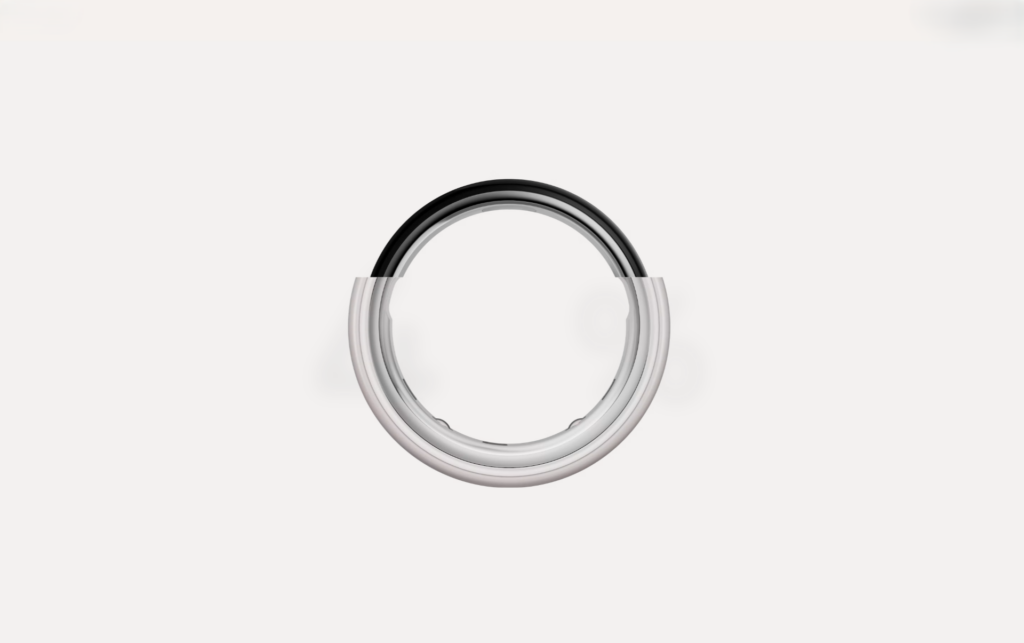
Oura advertises that the battery lasts for one week. It takes a little over an hour to charge fully. Wearing it nonstop, the battery lasts for almost eight days. That’s not the best for battery health, though, so I regularly charge it for a few minutes when I’m doing dishes or showering. Keeping it between 80% and 20% should improve battery health, extending its useful life.
I also like that the ring is non-allergenic and durable. It’s waterproof, fully titanium and has a super hard physical vapor deposition for improved scratch resistance. Since the smart ring is IP68-rated, I don’t have to worry about sweat, dust, sand or humidity damaging it. It’s also water-resistant up to 330 feet, so I can even shower, sauna or swim with it on.
The weirdest — and most helpful — features include cycle insights and period prediction. If you’re trying to conceive or have an irregular cycle, I highly recommend getting a smart ring. The Oura Ring tracks body temperature, which naturally fluctuates as hormone levels change.
Oura partnered with Natural Cycles, the first FDA-cleared birth control app, to automatically sync data. This level of detail is what sets this review of the Oura Ring apart from cheaper fitness trackers that only scratch the surface of health monitoring.
I don’t like that my step count is never spot-on. Fitness trackers use accelerometers to measure the change in your arm’s speed and direction to track steps. Since you move your hands a lot even when you’re not walking, smart rings have to use heart rate and rhythm analysis to differentiate gestures and steps. These algorithms aren’t always accurate.
Another issue I have with the Oura Ring is that it requires a subscription to see any detailed metrics. While $6 a month might not seem like a lot, I’m already paying for cloud, video streaming, delivery, audio streaming and video game subscription services. Also, why should I spend another $70 a year after spending hundreds of dollars on the ring itself?
Another reason I take issue with the subscription is that the ring tracks these metrics 24/7, so the data exists regardless of whether I pay for it. Why should I have to pay for my own data? It’s particularly frustrating that the Women’s Health features are locked behind the subscription. Let’s be real — it’s a pink tax.
I’ve heard that older generations become high-maintenance — that, after a few years, the battery starts dying faster and getting it to reliably connect becomes difficult. Some people say that, after a few months, their battery lasts just three or four days before dying. This longevity concern makes me wonder whether the premium price is really justified.
Another issue is the lack of repairability. If something goes wrong with the ring — whether it’s a battery issue, connectivity problems or physical damage — you can’t really fix it. You’re essentially forced to buy a new one, which feels wasteful and expensive. At least with my Apple Watch, I can take it to an Apple Store and potentially get it repaired or replaced under warranty.
I also wish the Oura app offered more customization options. While the data is comprehensive, I don’t have much control over which metrics I see first or how my dashboard is organized. It is a one-size-fits-all approach when I’d prefer to prioritize the health data that matters most to me. For the subscription price I’m paying, I expected more flexibility.
The first-generation Apple Watch SE is supposed to last 18 hours between charges. This might seem like a lot, but if you wear it throughout the day, you won’t be able to track your sleep. It takes two to three hours to fully charge, which is annoying.
So far, my experience with the Oura Ring has been much better. If I drain the battery to near zero, it takes a little over an hour to fully recharge. I didn’t spring for the official charging case, which is sold separately. I could’ve charged the smart ring enough for a full 24 hours within 10 minutes.
That said, my Apple Watch does beat the Oura Ring in a few areas. The step tracking on my Apple Watch is far more accurate since it sits on my wrist and captures arm movement more reliably. The Oura Ring’s step count is consistently off, sometimes by hundreds of steps per day.
My Apple Watch also has a much larger screen, which makes it easier to quickly glance at my stats without pulling out my phone. Plus, it integrates seamlessly with my other Apple devices, whereas the Oura app feels more isolated. So while I prefer the Oura ring for sleep tracking and battery life, I still reach for my Apple Watch when I want accurate activity tracking.
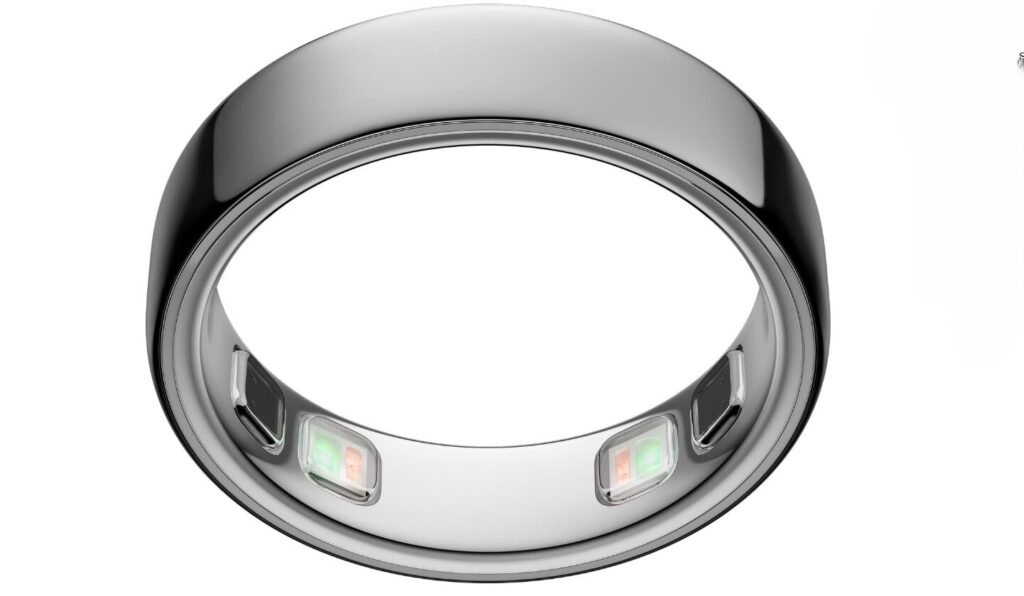
Overall, the Oura Ring is a reliable, feature-rich smart ring. It’s a good idea to upgrade if you’re using a generic smart ring. Compared to cheap Amazon knockoffs, the Oura 5 wins every time. I’d also recommend the Oura Ring 5 if you own a Gen 3.
The Oura 5 is a great option for first-time buyers and Gen 3 owners because it’s the latest model, which means it’ll receive support for longer. Also, it’s the world’s smallest smart ring, so it is less bulky than any previous generation. Upgrading is definitely worth it for the lucky Gen 3 owners who bought a Lifetime Membership.
Be aware that the sizing is different, so you should order a sizing kit before you commit to an upgrade. Based on my review of the Oura Ring, new users will appreciate the accuracy and depth of health insights this device provides.
The main difference between Gen 4 and Gen 5 is that the newer ring is 40% smaller. If you don’t care about having the thinner band, I’d recommend getting the Gen 4. When I got the Oura 5, it was $50 more expensive than the Oura 4. That’s almost enough to pay for an entire year of an Oura Membership.
Here’s the thing — the Gen 4 and Gen 5 have nearly identical features and performance. Both track the same health metrics with the same level of accuracy, and both require the same subscription to unlock detailed insights. The battery life is comparable, and they both sync seamlessly with the Oura app. So, unless you have smaller fingers or really value the sleeker profile, you’re not missing out on much by sticking with the Gen 4.
The Gen 4 is an especially smart choice if you’re new to smart rings and want to test the waters without committing to the highest price point. You’ll get the full Oura experience at a lower cost, and if you decide you love it, you can always upgrade later. Plus, with the money you save, you could put it toward a few months of the Oura Membership subscription, which is where the device’s real value lies, anyway.
The Oura Ring 5 delivers impressive accuracy and comprehensive health tracking in an incredibly compact design. If you value detailed sleep insights, illness detection and women’s health features, it’s worth considering — just be prepared for the ongoing subscription cost.
For first-time smart ring buyers, the Oura 5 offers cutting-edge technology that outperforms budget alternatives. If you already own an Oura Ring and it’s still working well, you can probably skip upgrading unless the slimmer profile appeals to you.
The Gen 4 remains a solid choice if you want to save some money up front. Overall, this review of the Oura Ring confirms it’s a solid investment for anyone serious about health tracking, despite a few drawbacks.