
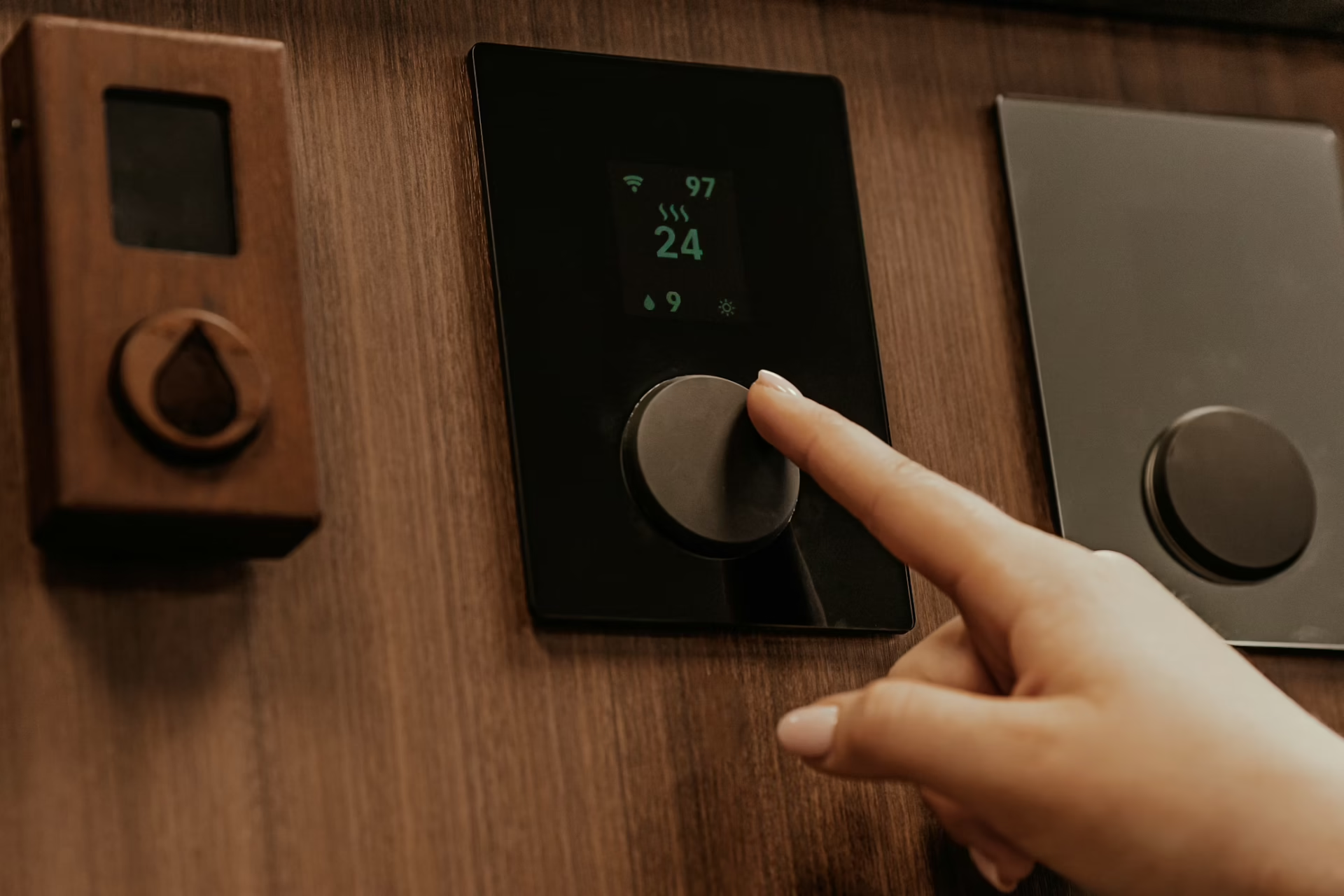
Have you ever wondered why so many people are upgrading their thermostats? You’re not alone. Smart thermostats have become one of the most popular smart home devices. They are highly intuitive and mostly user-friendly, but the technology behind them can be a bit complex.
A smart thermostat is a temperature control device that connects to the internet and uses data to manage your home’s heating and cooling more efficiently. Aside from following basic controls, a smart thermostat adapts to how you live. This tech is still relatively new, with 19 million homes installing it by the end of 2022.
To understand what makes a thermostat “smart,” it helps to compare it with the options that came before it.
Manual thermostats are the most basic type. You adjust the temperature by hand, usually with a dial or buttons. When you set a manual thermostat to a specific temperature, it will stay there until you change it, as there are no automation or remote control capabilities.
Programmable thermostats improve convenience by letting you set schedules. For example, you could program the temperature to drop while you’re at work and warm up again before you get home. While helpful, these thermostats rely on you to create and maintain schedules. It will maintain its programmed behavior until you change it.
Smart thermostats go a step further. You can use your phone to control them wherever you are. They also connect to Wi-Fi and often learn your habits and preferences automatically. Instead of you adapting to the thermostat, it adapts to you and your household. This combination of connectivity and automation is what makes a smart thermostat “smart.”
The technology behind smart thermostats can be complex behind the scenes, but they come together to create something simple for you to use. Here are some of its main components.
The defining feature of a smart thermostat is its connectivity. By connecting to your home’s Wi-Fi network, the thermostat can communicate with a mobile app and cloud-based software.
This connection allows you to check and change your home’s temperature remotely and use real-time weather data to fine-tune heating and cooling decisions. Since the thermostat is able to work with more information, it can make smarter adjustments based on indoor conditions or outside temperatures.
Smart thermostats rely on built-in sensors and algorithms to understand how your home functions. Motion sensors detect whether someone is home, while temperature and humidity sensors track comfort levels throughout the day.
Over time, the thermostat uses AI to notice patterns, allowing it to create an automatic schedule that balances your comfort and overall energy efficiency. The longer you use it, the more accurate the system becomes, reducing the need for manual programming.
Remote control is one of the most helpful benefits of a smart thermostat. You can use a smartphone app to adjust its settings from anywhere, whether you’re at home or outdoors.
Geofencing adds another layer of automation. By accessing your phone’s location, the thermostat can tell when you’ve left home and shift into energy-saving mode. When you’re heading back, it can adjust the temperature so your home feels comfortable when you arrive.
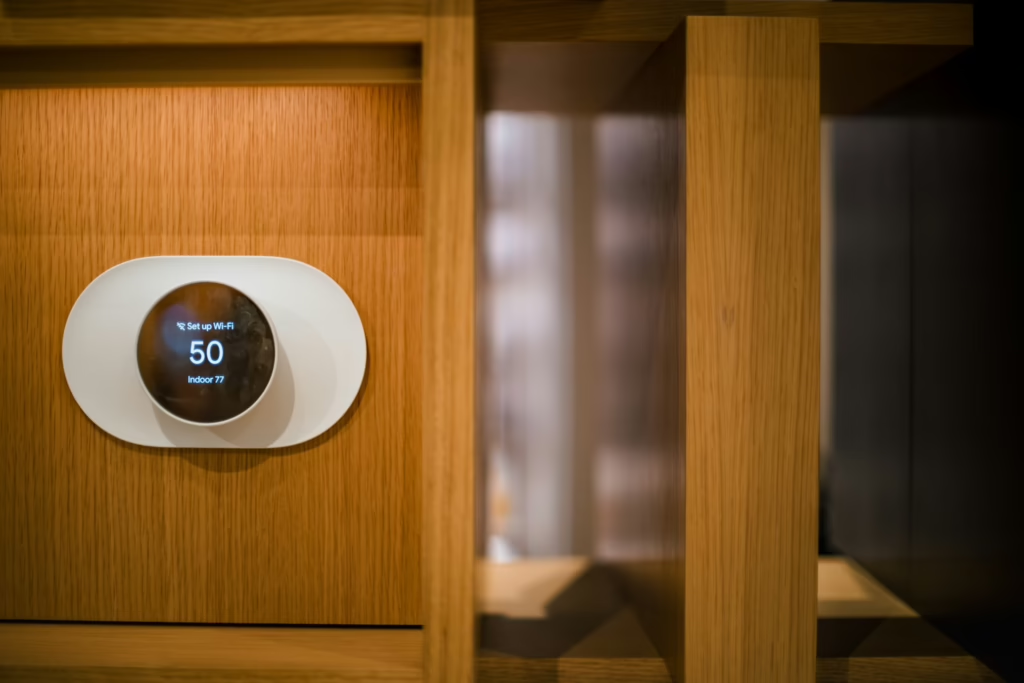
Once you understand how the technology works, it’s also important to examine why it matters. Smart thermostats offer practical advantages, making them appealing to a wide range of users.
One of the biggest benefits of a smart thermostat is improved energy efficiency. By avoiding unnecessary heating or cooling when no one is home, these devices help reduce wasted energy.
A recent study conducted in Toronto found that households that used smart thermostats were able to save up to 30 Canadian cents per day during the summer months. These devices optimize usage patterns and respond to real-life behavior, saving both energy and money.
Smart thermostats aim to fit seamlessly into your daily life. You can warm or cool your home before you arrive or override automated settings when your plans or comfort levels change. Instead of constantly thinking about temperature management, you can let the system handle it in the background while still being able to take control when you want it.
Many smart thermostats provide detailed reports that show how often your heating and cooling systems run and how your habits influence energy costs. These insights help you understand where your energy is going and why. Instead of guessing, you can see clear patterns and make informed decisions, whether that means adjusting schedules or being mindful of usage during peak times.
For the 16% of homes worldwide with a smart home ecosystem, a thermostat is an excellent addition. It can communicate with other connected devices to improve comfort, efficiency and sometimes even safety. This kind of integration turns individual smart gadgets into a coordinated system.
Smart thermostats commonly work with virtual assistants like Alexa and Siri, making temperature control completely hands-free. You can change the temperature or check current settings just by speaking. This feature is especially convenient when you’re cooking or already settled in bed and don’t want to reach for your phone or walk to your thermostat.
Voice control also makes smart thermostats more accessible, allowing anyone in the household to adjust the temperature quickly without needing to fiddle with the app or device settings.
Aside from voice assistants, smart thermostats can integrate with various smart home devices to optimize your home. For example, when paired with smart smoke detectors, a thermostat can automatically shut off HVAC fans during a fire. This function helps prevent smoke from circulating throughout the house, adding an extra layer of safety.
Smart thermostats can also work with smart blinds or shades. On hot days, blinds may close automatically to keep the sun out, allowing the thermostat to run the air conditioner less often. These coordinated actions help improve comfort while reducing unnecessary energy use.
A smart thermostat is a convenient and effective way to manage comfort and energy use. If you want automation, remote access, smart operations and insights into how your home uses energy, a smart thermostat can be a practical addition to your household.