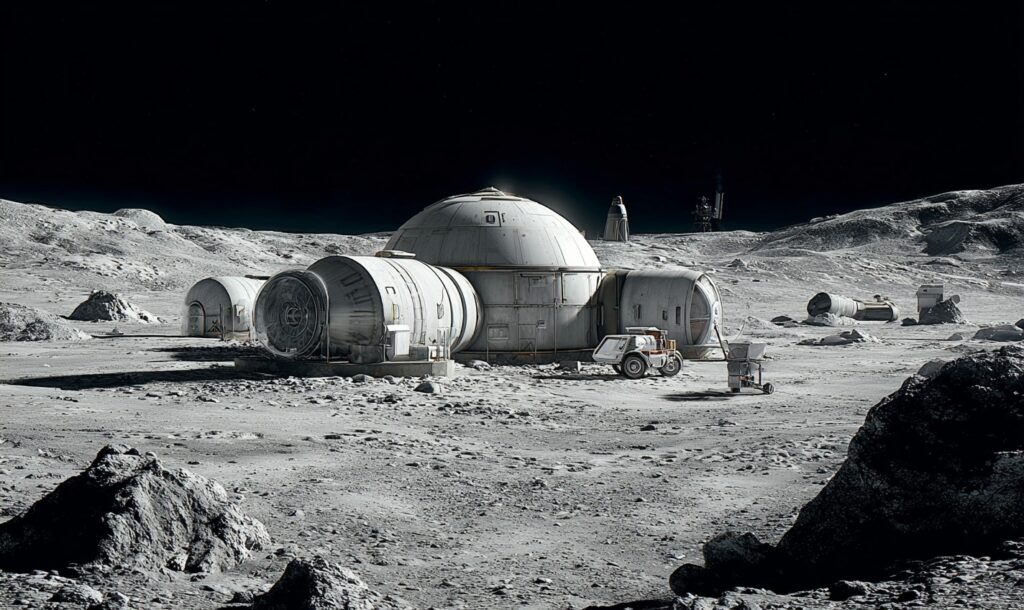
As part of the Artemis missions, NASA is attempting to get astronauts back to the surface of the moon and build a sustained human presence there. The U.S. isn’t establishing a permanent moon base as of yet. Still, its current approach is laying the framework for long-term lunar operations that may one day enable more space exploration, including future expeditions to Mars.
What Is NASA’s Official Plan?
The United States isn’t planning a typical science-fiction-style “moon base” just yet. Still, NASA does have a systematic blueprint for developing a prolonged human presence on the lunar surface. That work is focused on the Artemis program, which aims to move beyond brief trips and toward repeated flights that incrementally improve what astronauts can do and how long they can stay on the moon.
A Three-Phase Strategy for Returning to the Moon
NASA’s broader lunar strategy follows a three-phase exploration plan that begins with returning astronauts to the surface, transitions into developing long-duration infrastructure and operations, and eventually supports preparation for missions to Mars. Altogether, the agency estimates its lunar exploration campaigns would require $30 billion in investment over the next decade as systems, launch vehicles and surface technologies come online.
The Role of Artemis Base Camp
At the center of this proposal is a concept called Artemis Base Camp, a proposed lunar colony to be located near the moon’s south pole. NASA believes the site has better access to sunlight for power generation and to frozen water that may be used for life support and to make fuel. Rather than building everything at once, the agency wants to build the base incrementally as part of the Artemis campaign.
Building Toward Long-Duration Lunar Operations
In NASA’s long-term design plans, Artemis Base Camp would eventually include a:
- Fixed surface habitat
- Mobile living and working space and a mobile working area in a pressurized rover
- Non-pressurized lunar surface vehicle for short excursions
The systems are designed to support weeks-long astronaut stays while testing the technology needed for deeper missions into the solar system.
This approach is different from the methods used in previous lunar exploration endeavors. Artemis is meant to enable recurring surface operations that can build toward long-duration presence, not short land-and-leave excursions like those of the Apollo era. NASA hopes these trips will help develop the infrastructure for a sustainable lunar foothold and prepare astronauts for journeys to Mars.
The Technology Needed for a Moon Base
Building a functioning moon base requires more than transportation systems capable of reaching the lunar surface. Long-term operations depend on:
- Reliable habitats
- Power generation infrastructure
- Environmental life-support systems
- Vehicles designed for sustained work in extreme lunar conditions
Many of these technologies are already part of the Artemis surface architecture NASA is developing to support a continuous human presence beyond short-duration missions.
Habitats and Construction Systems
The first lunar dwellings will likely be prefabricated surface modules transported from Earth and expanded as mission cadence increases. The foundation surface habitat of the NASA Artemis Base Camp architecture is the primary living and operations center for astronauts and supports communications, maintenance activities and scientific activities on the lunar surface.
Eventually, construction tactics will shift toward using local materials rather than relying on goods lofted from Earth. A key aspect of that strategy is the use of technologies such as In-Situ Resource Utilization (ISRU) to convert lunar dirt into building materials for habitats, greatly easing long-term development.
Scientists are investigating strategies to extract oxygen and structural materials from lunar regolith to promote the development of systems and infrastructure.
Power and Life Support Systems
One of the greatest engineering challenges of any lunar colony is the reliable generation of electricity. Surface power systems could support communications equipment, mobility platforms and habitation modules through lengthy missions as part of the Artemis Base Camp concept. NASA is developing fission surface power systems to provide a continuous power source during extended nights when solar arrays alone may not be enough. The systems would supply 40 kilowatts of power, which could power 30 homes for 10 years.
Closed-loop recycling technologies, adapted from those already in use on the International Space Station, will also be relied upon substantially for life support systems. These environmental control technologies recycle air, collect water and eliminate the need for frequent resupply missions from Earth, allowing longer surface stays.
Surface Mobility Across the Lunar Environment
Another key component of a functioning lunar outpost is mobility systems. The Lunar Terrain Vehicle (LTV) is part of NASA’s Artemis surface infrastructure, enabling astronauts to go farther.
The LTV itself is outfitted with advanced communications, autonomous navigation features and power-management technologies that allow astronauts to maneuver safely across rugged terrain. These vehicles will dramatically increase the distance crews can travel from their landing spots, enabling them to cover hundreds of miles per year.
The Missions That Will Build the Base
NASA’s strategy for helping a future moon outpost relies on a series of Artemis flights that gradually build the infrastructure needed for a prolonged stay.
The first three Artemis missions to lay the technical groundwork include:
- Artemis I: This uncrewed trip was the first deep-space test of the Orion spacecraft and Space Launch System combined, completed in 2022. The mission confirmed the technology needed to ferry astronauts safely, providing navigation, communications and heat-shield performance throughout a multi-week voyage around the moon.
- Artemis II: Artemis II ferried astronauts around the moon on a journey that did not include a landing. This mission put life support systems and crew operations in outer space to the test ahead of NASA’s long-term surface exploration.
- Artemis III: Artemis III is planned to return humans to the lunar surface for the first time since Apollo, and will aim for the moon’s south pole region — the same location chosen for future Artemis Base Camp infrastructure because it is in sunlight.
Once the astronauts return to the surface, following Artemis missions will provide extended durations through cargo systems, mobility vehicles and housing components needed to enable persistent activities. NASA and its international partners are also developing the Lunar Gateway, a small station orbiting the moon that will serve as a staging point for surface missions and logistics coordination.
In the long run, the missions are expected to support the development of the transportation network and surface systems needed to move from brief visits to a more permanent presence on the moon.
A Moon Base Is Taking Shape One Mission at a Time
The U.S. is not establishing a permanent moon base overnight. Still, NASA’s Artemis mission is making steady progress in putting the technologies in place that may support long-term human activities on the lunar surface. Through a series of missions, the agency is taking steps to establish a sustainable presence on the moon and prepare for future exploration beyond the moon.
Recent Stories
Follow Us On
Get the latest tech stories and news in seconds!
Sign up for our newsletter below to receive updates about technology trends