At the end of the day, which company makes a better device, Apple or Samsung? This comparison will break it down as objectively as possible.
Apple released the iPhone 17 series in September 2025. Samsung’s latest models are the S25, 25+ and S25 Ultra, which are the most comparable to the iPhone 17 models, so this comparison will focus on the S25 and iPhone 17 lineups.
iPhone vs. Samsung Galaxy
Apple’s iPhone 17 series includes the base, Pro and Pro Max models, while Samsung’s Galaxy 25 lineup consists of the base, Plus and Ultra models. They may look similar, but the differences in their internal components matter.
| Phone Model | iPhone 17 | iPhone 17 Pro | iPhone 17 Pro Max | Galaxy S25 | Galaxy S25+ | Galaxy S25 Ultra |
| OS | iOS 26 | iOS 26 | iOS 26 | Android OS 16 | Android OS 16 | Android OS 16 |
| Size and Weight | 5.89” x 2.81” and 6.2 ounces | 5.91” x 2.83” and 7.3 ounces | 6.43” x 3.07” and 8.2 ounces | 5.78” x 2.77” and 5.7 ounces | 6.24” x 2.98” and 6.7 ounces | 6.41” x 3.05” and 7.7 ounces |
| Display Size | 6.3-inch OLED display | 6.3-inch OLED display | 6.9-inch OLED display | 6.2-inch AMOLED 2X display | 6.7-inch AMOLED 2X display | 6.9-inch AMOLED 2X display |
| CPU | A19 chip with 6-core CPU | A19 Pro chip with 6-core CPU | A19 Pro chip with 6-core CPU | Octa-core Snapdragon 8 Elite | Octa-core Snapdragon 8 Elite | Octa-core Snapdragon 8 Elite |
| Memory Capacity | 8GB RAM | 12GB RAM | 12GB RAM | 12GB RAM | 12GB RAM | 12GB RAM |
| Battery Life | 30 hours of video playback | 33 hours of video playback | 39 hours of video playback | 29 hours of video playback | 30 hours of video playback | 30 hours of video playback |
| Resolution | 2622 x 1206 at 460 ppi | 2622 x 1206 at 460 ppi | 2868 x 1320 at 460 ppi | 2340 x 1080 at 416 ppi | 3120 x 1440 at 513 ppi | 3120 x 1440 at 498 ppi |
| Camera Quality | 18MP front, two 48MP Fusion rear | 18MP front, three 48MP Fusion rear | 18MP front, three 48MP Fusion rear | 12MP front, 50MP, 10MP and 12MP rear | 12MP front, 50MP, 10MP and 12MP rear | 12MP front, 200MP, 50MP, 50MP and 10MP rear |
| Video Quality | Dolby Vision in up to 4K at 60 fps | Dolby Vision in up to 4K at 120 fps | Dolby Vision in up to 4K at 120 fps | 8K at 30 fps or 4K at 60 fps | 8K at 30 fps or 4K at 60 fps | 8K at 30 fps or 4K at 60 fps |
| 5G Support | UWB, sub-6 GHz and mmWave | UWB, sub-6 GHz and mmWave | UWB, sub-6 GHz and mmWave | sub-6GHz 5G and mmWave | sub-6GHz 5G and mmWave | sub-6GHz 5G and mmWave |
AI Features: iPhone 17
Apple Intelligence can help you write, adjust your tone and translate texts in real time. You can also generate call transcripts, summarize emails and prioritize notifications. The Genmoji and Image Playground apps let you create custom emojis and images using text descriptions, themes or photos.
Speaking of photos, the Clean Up tool in the Photos app lets you remove unwanted background elements. In the Notes app, Image Wand can transform rough sketches or handwritten notes into clean, context-specific visual aids. With the Visual Intelligence feature, you can circle objects or text in images for AI-powered search or summarization.
Apple’s AI tools extend to Siri, making the voice assistant much smarter. It can now tap into ChatGPT as needed for more complex queries.
Samsung phones use Gemini Live, which enables seamless interactions across apps. For example, you can ask Gemini to make a list of the ingredients used in the cooking video you’re watching on YouTube. You can use natural language to ask questions, prepare presentations or brainstorm ideas. The AI will adapt to your conversation style.
You also get the all-new morning brief, which provides weather, coupons, schedule and activity highlights. Aside from being a writing coach and personal assistant, the AI tools can help capture and edit video. Samsung’s most advanced AI ProVisual Engine can filter background noise in video, create custom filters and adjust lighting conditions.
Build Quality: Tie
When it comes to the iPhone 17, you’ll notice some exciting changes in material and design. Apple upgraded to the latest-generation Ceramic Shield, which is magnitudes stronger than any smartphone glass. It’s also designed to be durable with IP68 water and dust resistance, so you don’t have to worry about everyday bumps or accidental splashes. This size and weight are perfect for daily use, staying comfortable in your hand while offering that premium Apple feel.
On the other hand, the Samsung S25 offers some impressive design updates. Its reinforced Armor Aluminum frame is paired with Gorilla Glass Victus 2, making it tough without compromising on aesthetics. Its thin bezels and large screen offer an immersive experience, whether watching videos or scrolling through social media. The lighter build and sleek design make it easy to handle, and it feels as premium as expected.
Affordability: Galaxy S25
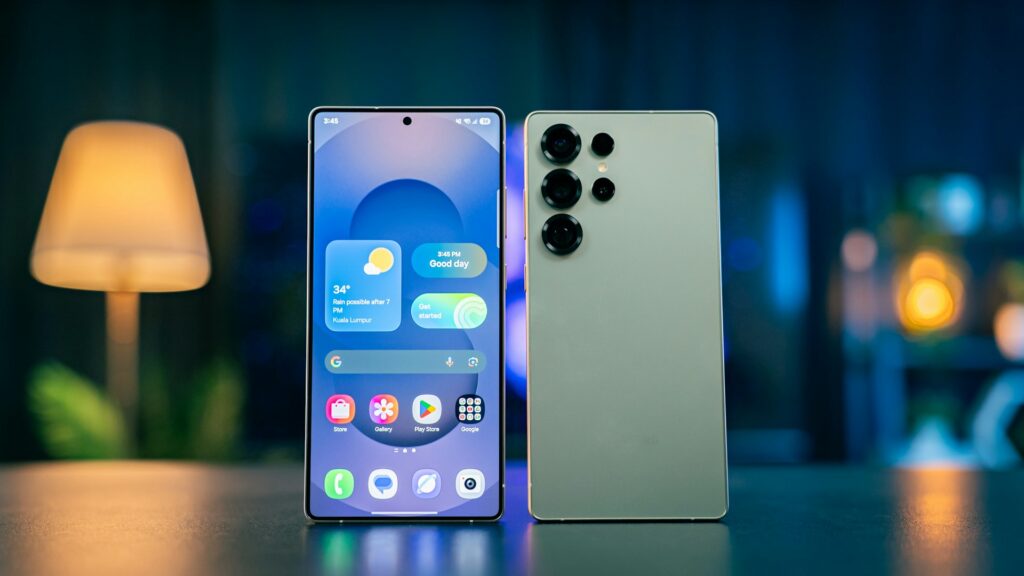
The latest smartphone from any company is not usually the cheapest way to get a smartphone. However, in terms of the price of a new phone in 2025, there’s a tie between Apple and Samsung. Both the Galaxy S25 and the iPhone 17 start at $799.
The iPhone 17’s storage capacity is 256GB. It also has options to go up to 512GB for those who need more space for around $100 more. While the price might seem steep, Apple justifies the cost with its powerful A19 Bionic chip and cutting-edge camera features.
Samsung’s prices climb as you opt for higher-end features like improved camera setups and larger storage options. The S25 offers more flexibility in terms of price and storage expandability, thanks to microSD support.
You may be happily using an older phone. Still, if you’re looking for more features at a lower price, the S25 offers better value, but the 17 delivers a premium experience that could justify its higher price tag for Apple loyalists.
Ecosystem: iPhone 17

The phone ecosystem is the wider collection of devices and apps that a phone is designed to interact seamlessly with. When it comes to iPhone vs Samsung, there’s no competition. iPhone has the better ecosystem in 2025.
Of course, Samsung is trying to build its own ecosystem and some users may simply prefer the Android operating system over iOS. So, this category depends on user preference to a certain extent.
However, iPhones have more devices that they are made to easily connect to and work with. The iPhone ecosystem includes the iPad lineup, the Apple Watch, the MacBook Pro and MacBook Air, the Mac and Mac Mini, Beats headphones, AirPods, Apple TV, the HomePod and HomePod Mini, and the Apple Vision Pro headset. iPhones are designed to integrate effortlessly with all of these devices.
The iPhone ecosystem also consists of apps only available on Apple products, such as FaceTime, Notes, Apple TV and more. You can find alternatives for all these apps for your Samsung phone, but they may not work exactly the same or be as well-integrated.
In addition to apps and devices, security is also part of a smartphone’s ecosystem. Apple wins in this category, as well. Since Apple is the only company that creates and controls all the devices in the iPhone ecosystem, they’re designed to operate very securely with one another.
Samsung is part of the Android ecosystem, which is developed by a plethora of companies like Google, Xiaomi, Huawei, Vivo, and countless others in addition to Samsung. Apple is also stricter about what apps are allowed on its App Store, so it is more difficult for malicious apps to be available on the iPhone.
Customization: Galaxy S25
Customization is one area where Samsung has long had an edge over Apple. The iPhone is designed to be simple to use, but this means that Apple doesn’t offer many customization features on its phones. In contrast, Samsung’s phones are loaded with room for customization and creativity.
On Samsung phones, you can change your phone’s theme, color theme, icon designs, keyboard appearance, and even the font. You can do some of those things on an iPhone, but not all of them.
In the past, iOS 18has made large strides in customization. Users with older iPhones will still need to use widgets or shortcuts to customize their home screens, but with the newest operating system, they have more color customization options. iOS 26 added “Liquid Glass” icons, improved lock screen personalization, call screening and iMessage backgrounds.
However, while Apple has made a lot of progress, Samsung users have been able to do all of these things — and more — for years now. Apple is closing the gap, but Samsung is still ahead in personalization.
Camera Quality: Galaxy S25
The smartphone camera competition between iPhone vs Samsung is one of the toughest comparisons to make. Both phone lineups have incredibly good cameras today. Ultimately, it’s a tie. Which camera is better for you depends on what exactly you want to use your camera for.
The iPhone 17 continues to impress with its camera capabilities, featuring a 48MP main sensor and improved ultra-wide and telephoto lenses. While it doesn’t support 8K video recording, it offers 4K at 60fps — 120 fps for the Pro and Pro Max models — which is more than enough for most content creators.
The phone also includes AI-based photo enhancements, making your shots look stunning with better low-light performance, sharper details and automatic settings adjustments. If you value precision and an intuitive editing workflow across Apple devices, the iPhone 17 has you covered.
Meanwhile, the Samsung S25 offers a robust triple-lens camera system — including a 50-megapixel wide, 10-megapixel telephoto and 12-megapixel ultra-wide lenses — making it versatile for different shooting situations. It also allows 8K video recording at 30fps, a step up for creators who need higher-resolution footage.
The S25 Ultra has four rear cameras, including a 200MP main camera. If you’re a photography enthusiast who values flexibility and unique camera features, the S25 helps you get creative with your shots.
Whether you’re into photography and videography, Samsung’s camera system offers more flexibility and innovation, especially for those who love experimenting with unique features and higher-resolution video.
Battery and Performance: iPhone 17
Battery is a key category when comparing any two phones. It can be a hassle charging your phone repeatedly throughout the day. While all of the Galaxy S25 models can handle around 30 hours of video playback, the iPhone 17 Pro Max can last up to 39 hours before dying, which is impressive. The Galaxy series wins this part of the iPhone vs Samsung debate.
The iPhone 17 comes with Apple’s latest A19 Bionic chip, giving you incredible speed and efficiency. Paired with 8GB of RAM, it makes multitasking, gaming and running demanding apps effortless. It offers top-tier performance while still being energy-efficient, meaning you can tackle heavy tasks without draining your battery quickly.
The Samsung S25 offers the Qualcomm Snapdragon 8 Gen 4. With up to 12GB of RAM, this phone can handle everything from intense gaming sessions to running multiple apps simultaneously. The S25’s GPU is optimized for graphics-heavy tasks, delivering smooth gameplay and fast app performance, making it a great choice for mobile gamers.
How long a smartphone’s battery lasts depends heavily on how you use it. Some people may get hours more out of the S25 while others get better performance from the iPhone 17. Both phones offer impressive speed. However, if you need a device that excels in raw power and multitasking, the Samsung S25 stands out, while the iPhone 17 shines in overall efficiency and battery management.
What’s In the Box: Tie
This iPhone boasts some long-awaited colors. You can choose from ultramarine, teal, pink and black. The Pro models are made with an aluminum unibody instead of the traditional titanium, so it has shades of orange, deep blue and white. The noticeable differences with this lineup include the Action button, Camera Control button and Dynamic Island.
So, what’s in the box of the iPhone 17 lineup? Along with your phone of choice, you get a USB-C to Type-C cable. You don’t get headphones or adapters. Unfortunately, Apple follows the trend it set a while ago and doesn’t include a charging block.
The Galaxy S25 is available in navy, mint, silver and light blue. Samsung also offers online-exclusive colors, such as black, red and rose gold. Both models follow their predecessors in terms of design and appearance.
iPhone vs Samsung: Who’s the Winner?
iPhone vs Samsung: who’s the winner in 2025? If you can only choose one of these phones, you’re probably better off with Samsung. While iPhones have a better ecosystem and resale value, Samsung has a slight edge when it comes to video quality, customization, build and affordability. Most users will be happy with either brand of phone, though.
Original Publish Date: 9/30/2022 — Updated 11/3/2025
Recent Stories
Follow Us On
Get the latest tech stories and news in seconds!
Sign up for our newsletter below to receive updates about technology trends