Have you ever met someone really good at recognizing others based on their facial features? Some people can even remember the faces of others they’ve only met once before.
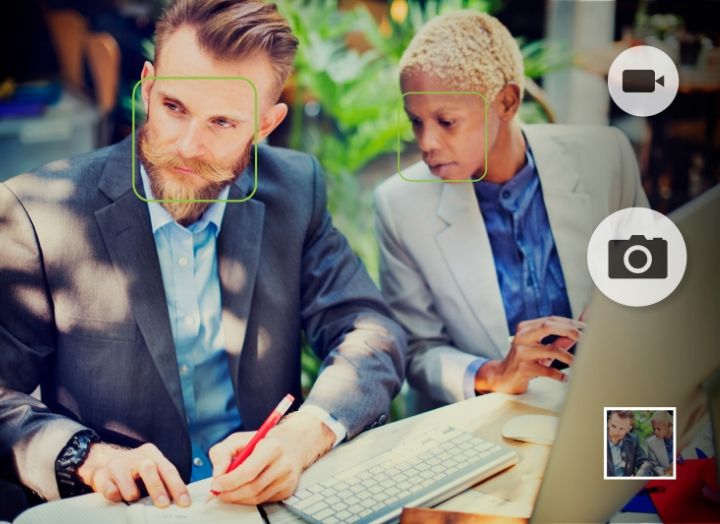
Facial recognition takes this concept to the next level by turning a picture of a face into data. Facial Recognition Technology (FRT) is exactly what it sounds like — tech that recognizes faces. But how does it work? Behind the scenes, there’s a complex process of analyzing facial features, converting them into numerical data and then matching them to a database.
FRT parses out the structure of a face and makes a map from the geometry it measures out. Here’s a more detailed breakdown of how this process works:
This combination of geometry-based measurements and machine learning models allows FRT to work with a high degree of accuracy. However, the effectiveness of the system still depends on various factors, such as the quality of the image, lighting conditions and the sophistication of the algorithms used.
FRT is used across several industries today:
FRT has made significant strides in accuracy, with some systems now achieving accuracy rates exceeding 90%. However, these outcomes are not universal due to challenges such as unbalanced datasets, where certain demographic groups are underrepresented in training data. This imbalance can lead to reduced accuracy for underrepresented groups.
Recent research has focused on mitigating these biases. For instance, researchers at NYU Tandon School of Engineering developed a method to generate demographically diverse synthetic face datasets, which can train facial recognition AI models to produce more equitable results across different racial groups.
Despite these advancements, concerns about bias and fairness persist. While some FRT algorithms perform well, they still show a tendency for false positives, especially among certain demographic groups, such as people of East Asian descent, Black people — particularly Black women, older adults and women in general.
While FRT has become more accurate, challenges related to bias and fairness remain. Ongoing efforts are essential to enhance the accuracy and equity of these systems.
As of 2025, public opinion on FRT remains divided. While some people support its use in specific areas like law enforcement and security, concerns about privacy and surveillance persist.
A 2021 survey found that 46% of Americans support FRT for public safety, but 75% of people remain wary of its broader use. This concern is especially high regarding potential misuse by governments or corporations.
In response, there are calls for clear regulations and transparency in FRT deployment, especially within law enforcement. The Biometrics Institute has urged for ethical guidelines to build public trust. Internationally, there are varying opinions, with some countries, like Australia, raising alarm over the lack of consent and awareness regarding the widespread use of facial recognition.
Overall, while FRT shows promise for specific applications, its widespread use continues to raise significant concerns about privacy and security.
The future of FRT holds great potential, but its widespread use will depend on addressing concerns about privacy, accuracy and bias. As the technology evolves, balancing its benefits with responsible regulation and ethical practices will be key. Moving forward, ongoing discussions and advancements will shape how facial recognition is integrated into society, ensuring its use remains both effective and fair.
Original Publish Date 6/12/2019 — Updated 2/27/2025