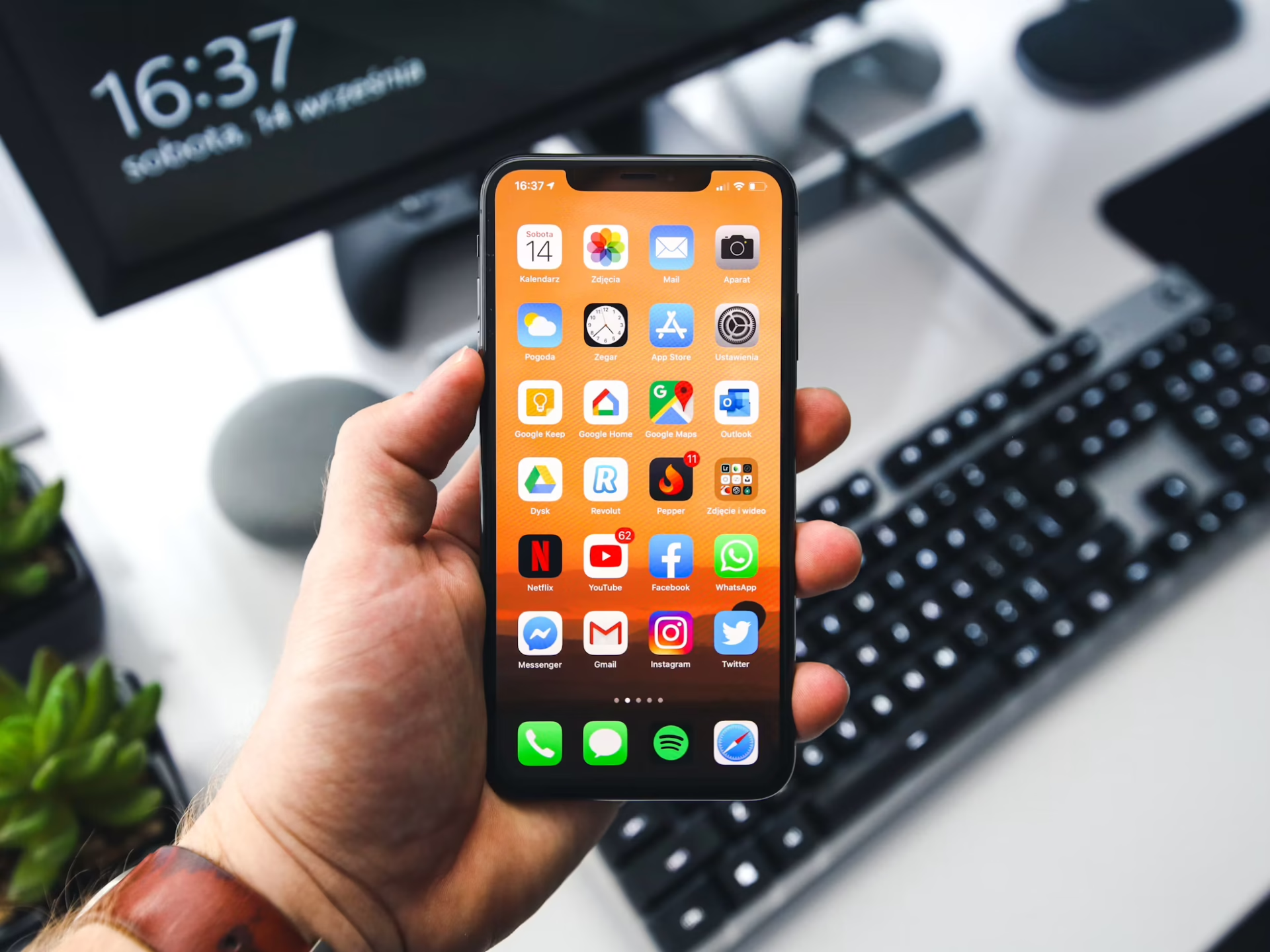

Recording phone calls on an iPhone has recently become a lot easier, but it still comes with several catches for users. While Apple finally added a native record button within the Phone app, the way it works is a bit controversial. Considering that the need for documentation and record-keeping remains a necessity in industries like business or journalism, knowing how to use this new feature and its alternatives is an important consideration.
Navigating these technical workarounds requires a deep understanding of hardware and third-party software, as well as some of the legal realities of digital consent.
Apple’s choice to finally include a native call recorder stems from its stance on global privacy. While the button is there now, it automatically plays a loud announcement to both participants saying the call is being recorded, providing insight into Apple’s heavy emphasis on compliance and why this feature took so long to establish.
Apple can effectively insulate itself from legal battles regarding non-consensual recordings by simply making this notification unskippable. It places full responsibility onto the user or any third-party bodies, helping the company retain neutrality. In a digital world where data breaches are increasingly common, the iPhone has made privacy one of its core pillars.
Native recording requires Apple Intelligence to process audio for transcription in the Notes app, which violates many industry-standard security protocols if the data isn’t handled carefully. This model ensures that app data remains isolated and prevents malicious actors from eavesdropping to steal information for social engineering.
Recording audio on a call conducted on an iPhone requires navigating the OS-level restrictions on microphone access. The solutions range from the new built-in button to physical dongles that intercept the signal. Each approach has distinct technical advantages and disadvantages. Professionals must weigh these factors and make an informed decision about how to record phone calls on their iPhones.
With the latest updates, you can now tap a waveform icon in the top-left of the call screen to start recording. After a three-second countdown, a robot voice announces to everyone that the call is being recorded. The audio is then saved directly into the Notes app. This is the most efficient way to record, though it doesn’t work for third-party apps like WhatsApp or Signal.
Even with the new button, many people still use third-party apps such as TapeACall. These apps use a “three-way calling” system, which involves dialing a service-specific recording line and merging that call with your contact, though subscription fees can often be high. This is often the preferred way to record without the loud Apple announcement or to capture calls on apps other than the standard Phone app.
Strategically leveraging Google Voice is also a popular option for recording phone calls on your iPhone. When you press 4 on the keypad during a conversation, an automated voice announces that the recording has begun, which ensures that legal consent is captured on the recording itself.
The file is then saved straight into your Google account for easy access. This is a great option because the personal version of Google Voice is free. However, a major limitation is that Google Voice does not support recording for outgoing calls.
It also requires the caller to dial your Google Voice number rather than your regular iPhone mobile number. It’s best to view this option as a specialized professional tool rather than a general-purpose tool.
Using robust hardware is the best choice for people who prioritize data security and high-quality. Devices such as the PhotoFast Call Recorder or MagSafe-compatible adapters plug straight into your phone’s port to intercept the signal.
These devices often record straight into an SD card, bypassing iOS entirely. Hardware recorders are a one-time investment and eliminate any subscription fees. It is also a great option for professionals who cannot risk a cloud server being hacked.
If you use physical gear, you have full control over your data. The key is ensuring the device is compatible with your iPhone model and that the battery is in good health for long conversations.
Picking the right method depends on a few key considerations, mainly involving budget and frequency. If you’re a more casual and infrequent user, it might be more strategic to pick the Google Voice or the native button option, as the monthly fee of an app might be excessive. However, if you’re a power user who records every day, it might be worth looking into hardware, as while the up-front cost is high, it is likely the most cost-effective solution over a year.
Another important factor is your need for transcription. Many third-party apps and the native Apple Notes app now include AI-driven text conversion, which is very valuable for writers and researchers. By contrast, hardware users must manually upload files to a separate transcription service. If your primary goal is quickly searching for keywords within a call, an AI-powered software ecosystem is likely the best path.
Recording phone calls on an iPhone is complex due to Apple’s strict privacy ecosystem. To capture conversations legally, professionals must navigate the differences between one-party and two-party consent laws, making it a standard best practice to notify all participants before a recording begins.
Since laws often vary by country and state, consulting legal resources is a critical first step to ethical and professional recordings. In one-party consent states like Texas or New York, you can record a conversation as long as you are a participant. Essentially, you are the one party giving consent.
In two-party states like California or Illinois, however, the law requires every person on the line to agree explicitly. This difference underscores the importance of legislative vigilance. The safest and most professional standard is always to inform all parties at the beginning of the call.
Simply stating, “I am recording this call for my records, is that all right?” provides a clear verbal contract and offers both parties legal protection across all jurisdictions. It also retains integrity, helping you build a strong professional reputation.
Recording phone calls on an iPhone remains a complex intersection of legal compliance and technical workarounds. Success depends on maintaining transparency with all parties to ensure legal compliance across state lines. Whether you’re documenting a quick interview or archiving a board meeting, a solid and ethical recording strategy is your best insurance policy.