Humanoid robots are set to land in U.S. homes in 2026. Tesla Optimus, Figure and 1X Technologies are all targeting the household market within the same window. If you care about what you bring into your home and what it costs the planet, you need more than a spec sheet — you need to know what’s actually inside these machines and what keeps them running.
Analyzing the Physical Form — Materials and Life Cycle
What a humanoid robot is made of matters long before it ever sets foot in your kitchen. The design decisions manufacturers make to keep these robots light, strong, and human-shaped all trace back to materials with real environmental histories.
The Anatomy of a Humanoid
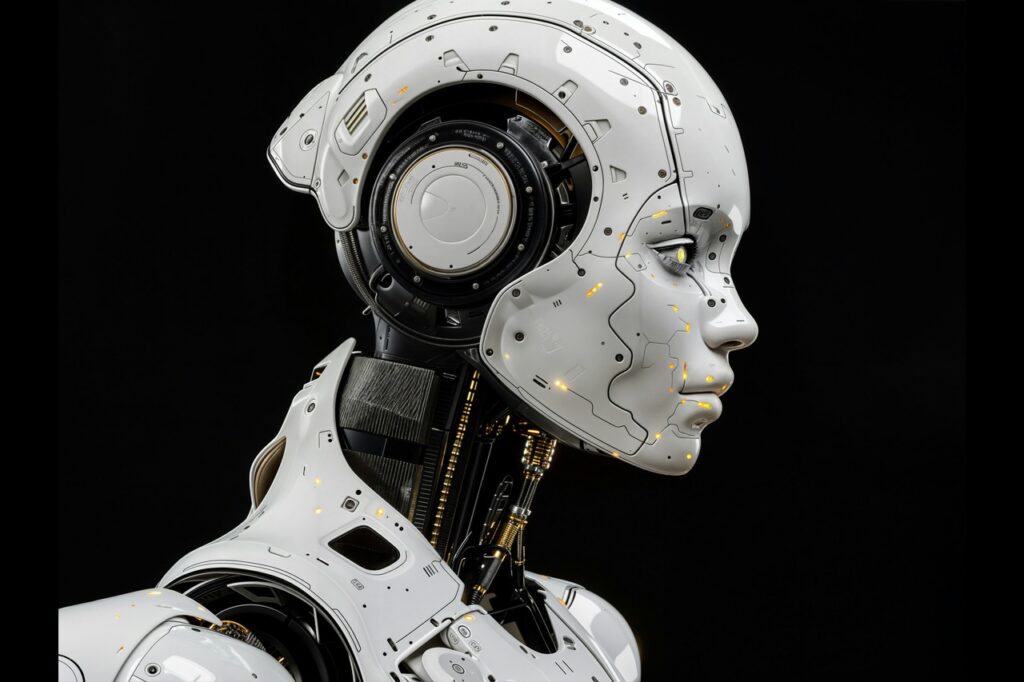
A humanoid robot has three main components: a structural frame, actuators and end-effectors. The frame is what gives it shape and support. Actuators are the motors in each joint that create movement, think of them as the muscles. End-effectors are the hands, the part that physically interacts with objects.
Frames are built from aluminum and high-strength steel, which are both chosen for durability without excessive weight. Synthetic polymers (a category of engineered plastics) cover joints and outer surfaces to reduce mass and soften contact. NEO, for example, uses a custom 3D lattice polymer shell across its entire body — partly for safety around people, partly to cut down noise.
The motors are the most material-intensive part. To be compact, powerful and precise all at once, they rely on rare earth magnets, specifically neodymium-iron-boron (NdFeB) magnets. Without them, the fluid movement you see in demo videos isn’t achievable at this size.
The Environmental Cost of Raw Materials
Every one of those material choices has a supply chain behind it, and most of those supply chains involve extraction.
Research puts the average humanoid robot at roughly 60 kilograms and draws on lithium, cobalt, nickel, rare earth elements, and copper. CRU Group’s robot component breakdown puts the numbers in clearer terms — 17-25 kg of aluminum for the frame, 4-8 kg of copper for actuators and wiring, 4-8 kg of battery metals like lithium and cobalt, and 1-2 kg of rare-earth elements for the motor magnets.
Cobalt is the most contested of these. Most of the world’s supply comes from the Democratic Republic of Congo, where mining operations have drawn sustained criticism over labor and human rights conditions. On the rare-earth side, China controls roughly 88% of global NdFeB magnet refining, meaning the motors inside these robots depend on a single country’s processing infrastructure.
Then there’s what happens at the end of a robot’s life. Only 17% of electronic waste globally gets recycled correctly. Robots aren’t formally classified as e-waste yet, but researchers argue they should be, and the industry isn’t ready for that reclassification. The mix of thermoset composites, embedded electronics, and polymer layers makes disassembly genuinely difficult. Materials like silver, used in circuit contacts and sensor components, get lost in standard shredding processes rather than being recovered.
Powering the Machine — Energy Consumption and Hidden Costs
Manufacturing is just the starting point. Once a robot is in your home, it draws power daily — and that’s before you factor in the cloud operations that keep it functional.
A Robot’s Daily Energy Diet
NEO’s battery holds 0.75 kWh, and 1X Technologies says daily operating costs run under a dollar at typical electricity rates. That’s roughly in line with charging a laptop, so on a household level, it doesn’t sound alarming.
Scale it up, though. Morgan Stanley projects humanoid robots could reach 63 million units in the U.S. alone by 2050. Sixty-three million devices charging daily — alongside electric vehicles and the growing list of smart home gadgets already on the grid — adds up to a meaningful new layer of residential electricity demand. The per-unit cost stays low. The cumulative grid load does not.
The Unseen Energy Drain of AI
The battery is only what you see. What you don’t see is the infrastructure keeping the robot’s AI running.
NEO’s intelligence is built on large language models that use the same underlying technology as ChatGPT, processed on Nvidia hardware, and updated via cloud-connected software. Every interaction, software update and system-wide learning cycle pulls from data centers operating around the clock. That’s not a NEO-specific quirk — it’s how AI-powered devices work across the board.
The International Energy Agency projects global data center electricity use will more than double by 2030, hitting around 945 terawatt-hours. This is a figure close to Japan’s entire annual electricity consumption. Researchers estimate that around 60% of that growth gets covered by fossil fuels, adding an estimated 220 million tons of carbon emissions.
AI’s resource footprint shows up in other ways, too. Studies show that around 80% of companies now use AI for recruitment. Still, those tools can unintentionally discriminate against applicants based on race, gender, or disability because they learn from biased historical data. The convenience of a home robot comes with that same dynamic — a hidden infrastructure cost that the buyer never directly sees, but the climate absorbs.
Evaluating Its Function — A Tool for Sustainability?
Manufacturers don’t shy away from positioning these robots as tools for smarter, greener living. Some of that pitch has genuine backing. Some of it requires a closer look.
The Promise of an Eco-Friendly Assistant
1X markets NEO around household tasks, such as folding laundry, unloading the dishwasher, or organizing shelves. A few of those capabilities actually do map to things that reduce waste.
NEO’s Visual Intelligence feature lets it identify ingredients on a counter and suggest meals based on what’s already there.
Extended to pantry management, a robot with that capability could flag food nearing expiration before it gets thrown out. This is a real problem, given that the U.S. wastes around 30% to 40% of its food supply, according to the USDA. Connected to a smart home system, the same robot could turn off lights, flag appliances left running or adjust heating and cooling when rooms are empty.
It’s worth noting that current units still rely on remote human operators for tasks outside their training data. The fully autonomous version in the marketing materials is still several software generations away for most buyers in 2026.
The Reality of Mass-Market Production
No manufacturer is building toward a niche product. They’re building toward global scale, and the environmental math changes dramatically when you think at that level.
Elon Musk stated the Tesla humanoid robot has probably 1,000 times more functions than a car and pegs potential profits at around $10 trillion. A market that size means adoption in the billions, and even a modest per-unit environmental impact becomes enormous when multiplied out.
It’s been estimated that demand from humanoid robots alone could drive incremental critical mineral consumption of $350 billion to $800 billion between 2035 and 2050. The average time to bring a new mine online globally is around 18 years, which means the supply chains needed to support that growth are already behind schedule. No serious infrastructure buildout is underway at the required scale.
The recycling side of this remains just as unresolved. University of Bristol researchers suggest that repurposing robots — reprogramming them for a new use rather than breaking them down for parts — may be more practical than conventional recycling for this product category. But consumer acceptance of secondhand robots, the business case for repurposing services, and any form of right-to-repair standard in the industry remain open questions.
Making an Informed Choice Before Bringing a Humanoid Robot Home
A home humanoid isn’t just a gadget purchase but a decision that touches mining supply chains, electricity grids, and AI infrastructure most buyers never think about. Some of what these robots can do genuinely supports a lower-waste household. But the full picture is more complicated than the marketing suggests. Knowing that complexity is what lets you make a decision you can actually stand behind.
Recent Stories
Follow Us On
Get the latest tech stories and news in seconds!
Sign up for our newsletter below to receive updates about technology trends