
Data centers have reached unprecedented scales as artificial intelligence (AI) and digital services demand more computing resources. However, identifying the biggest facility depends on the measurement used, since square footage, power capacity and regional inventory capture different aspects of scale.
The largest data centers in the U.S., therefore, include everything from sprawling individual campuses to entire regional markets and nationwide operator portfolios. These categories provide a clearer picture of where the country’s computing infrastructure has become most concentrated.
Traditional data centers typically support enterprise applications and networking within individual facilities. Hyperscale campuses operate differently, combining multiple buildings and massive computing resources to serve cloud platforms and digital services. Newer AI-focused facilities push these requirements further with dense GPU clusters that demand more electricity and advanced cooling.
Rather than constructing a single enormous building, operators develop campuses in phases, adding data halls and power capacity as demand grows. This approach has helped shift some of the largest data centers in the U.S. toward regions with abundant land and access to large amounts of electricity. These locations can offer more room for expansion than mature data center hubs.
Power capacity provides a practical way to compare data center campuses as computing workloads become more energy-intensive. The following facilities rank among the largest operational data centers in the U.S. based on reported capacity in megawatts.
xAI is expanding its AI infrastructure footprint in Southaven, Mississippi, where its Macrohardrr facility has a 2,000 MW fully built-out power capacity. Such enormous electrical requirements reflect the resources needed to develop and operate capable frontier AI models.
The campus stands among the largest data centers in the U.S. as xAI expands the infrastructure supporting its growing range of AI products. Its offerings include API tools for image generation, voice and agents, alongside the xAI For Government suite for U.S. federal, state and local government applications.
At this scale, computing power depends on more than installing additional servers. Dense GPU clusters require extensive cooling and supporting infrastructure capable of delivering reliable power across demanding AI workloads.
Video: Switch on Vimeo
Switch’s Citadel Campus near Reno, Nevada, stands out for the sheer physical scale of its planned data center footprint. The campus is designed to encompass up to 17.4 million square feet of data center space across multiple facilities, allowing Switch to expand capacity as customer demand grows.
The Citadel Campus is already partially operational, with completed facilities serving customers while additional development continues. Once fully completed, Switch expects Citadel to deliver up to 850 MW of power, combining its enormous footprint with extensive power and connectivity infrastructure.
Its phased development also demonstrates why campus square footage differs from the size of an individual data center building. Instead of concentrating capacity within one structure, Switch can add facilities, electrical equipment and supporting infrastructure across the broader campus over time.
Northern Virginia remains the largest established data center market in the U.S., supported by decades of investment in fiber connectivity, cloud infrastructure and power systems. The region includes Data Center Alley in Loudoun County and major concentrations of facilities across neighboring communities.
As of 2025, Northern Virginia housed approximately 4,039.6 MW of total data center inventory, representing a 37% increase from the previous year. That concentration gives the region an enormous lead as hyperscalers, cloud providers and colocation operators continue expanding their infrastructure.
However, rapid growth also places greater pressure on available electricity and transmission infrastructure. These constraints could encourage future development in emerging markets where operators can secure larger power allocations and enough land for new hyperscale campuses.
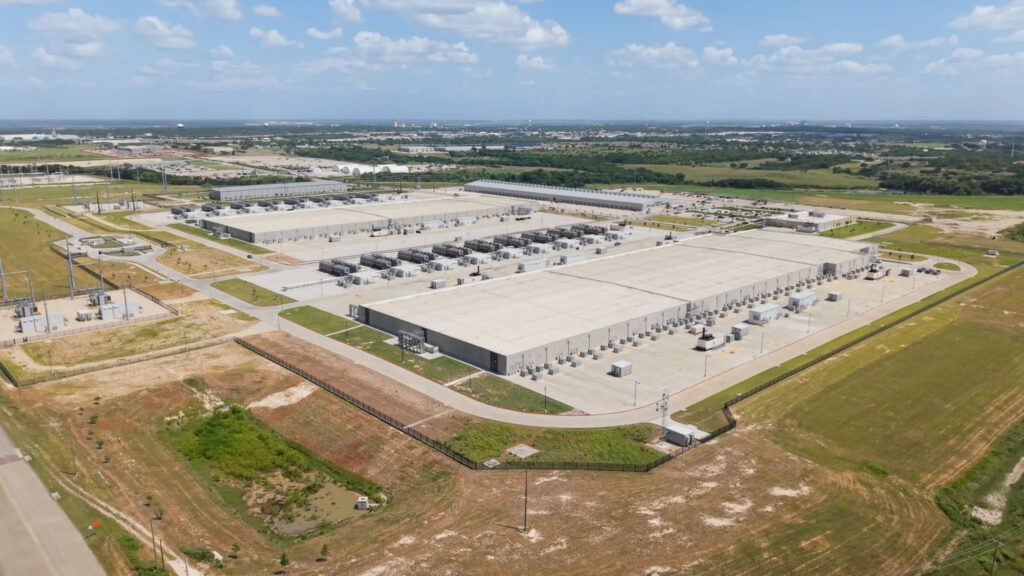
Meta has built an extensive U.S. data center network to support Facebook, Instagram, WhatsApp and its expanding AI operations. Its 15 operational data center campuses span 21 states and represent a combined 12,690 MW of capacity, alongside additional facilities under development.
AI has become an important driver of this infrastructure investment. Meta operates its own AI research organization, Meta AI, where researchers and engineers develop new AI models, technologies and applications for the company’s products.
The scale of Meta’s portfolio demonstrates how the largest operators distribute computing resources across multiple campuses rather than relying on a single massive facility. This geographic footprint also gives Meta the infrastructure needed to accommodate growing AI workloads while continuing to support billions of users across its established platforms.
Data center scale can refer to a few different things. Comparing these measures provides a more complete picture of the largest data centers and the resources behind them.
| Category | Leader | Location | Key Measurement |
| Power Capacity | xAI Macrohardrr | Southaven Mississippi | 2,000 MW at full build-out |
| Square Footage | Switch Citadel Campus | Tahoe Reno, Nevada | Up to 7.2 million square feet at full build-out |
| Market | Northern Virginia | Virginia | 4,039.6 MW of inventory in 2025 |
| Operator | Meta | 21 states | 12,690 MW across 15 operational data centers |
Generative AI and high-performance computing are driving the development of data center campuses with gigawatt-scale power requirements. In fact, more than 1,500 new data centers are reportedly in various stages of development nationwide, signaling how quickly demand for computing infrastructure continues to grow.
Much of that expansion comes from GPU-based AI servers, which consume significantly more electricity and generate more heat than many traditional server deployments. As the largest data centers in the U.S. become more power dense, operators must invest heavily in substations, transmission infrastructure, advanced cooling and on-site power generation.
This rapid buildout also creates challenges for electric utilities. Clusters of massive facilities can compete for limited grid capacity, requiring utilities and developers to plan new generation and transmission projects alongside future data center growth.
Record-breaking data center development depends on access to electricity. Operators must secure enough generation, transmission and supporting infrastructure to power dense computing systems while leaving room for future expansion.
AI development will intensify those requirements as companies deploy larger GPU clusters and build ambitious campuses. Today’s leaders may change quickly as gigawatt-scale projects move from development plans into operation.