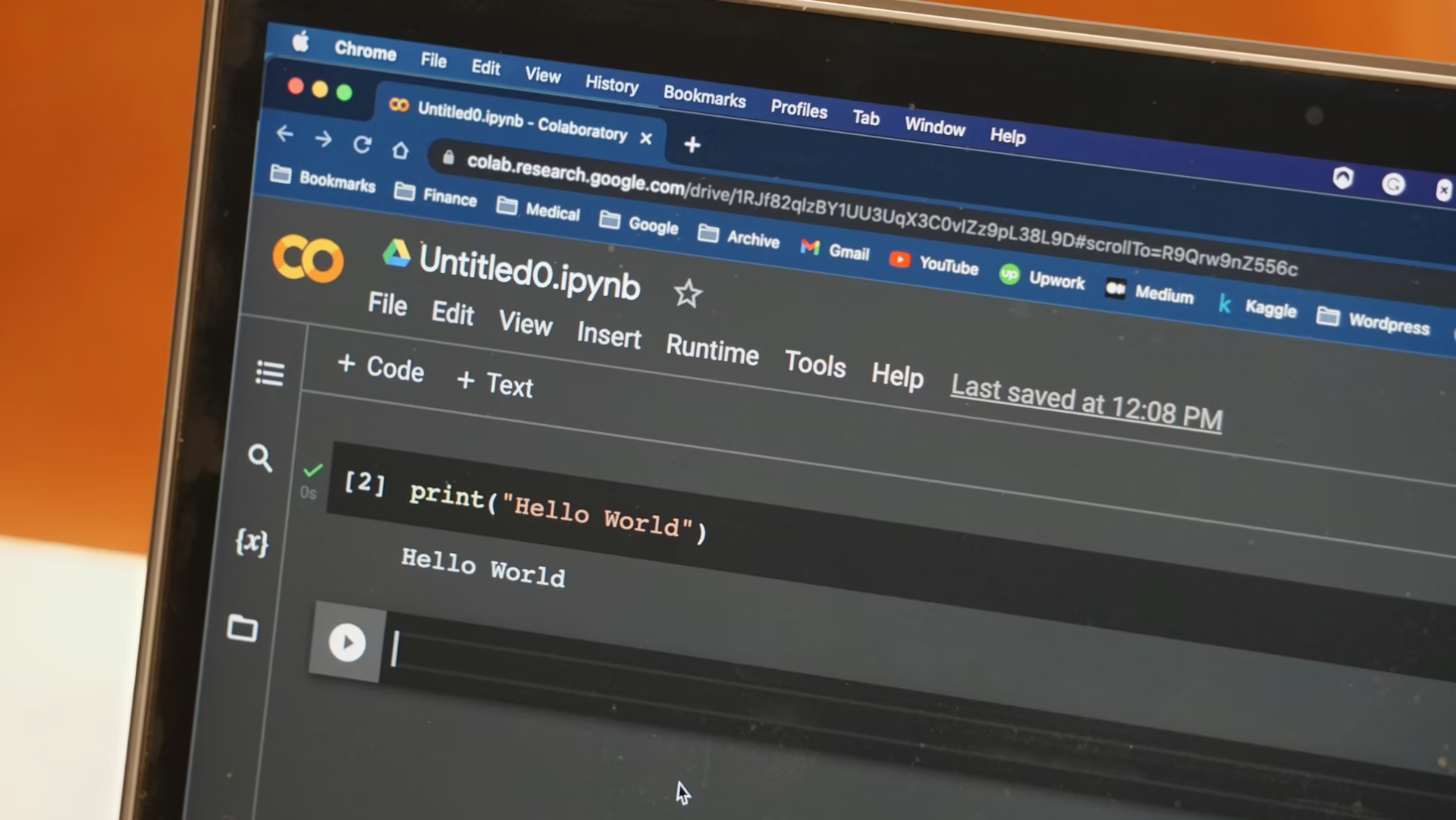

Whether training an entire corporation or simply updating themselves on a few basic skills, HR instructors today face one major decision: Should they learn through an online course or one in a traditional classroom?
More than 6.7 million adult students took at least one online class in 2011, a number up sharply from 1.6 million in 2002. Around 87 percent of higher education schools offered at least some online curriculum or blended models.
While both types of education offer pros and cons, online learning has the benefit of being more cost-effective. Online courses also offer the flexibility to take classes on a day and time that is convenient for you, which can be key factor for those with a full workload of responsibilities. Below, you’ll find the pros of traditional learning vs. elearning so that you can make an informed decision about which type is right for you and your educational goals.
A traditional classroom has a few advantages:
Also, some people simply prefer the setup of a traditional classroom because it is familiar. Similarly, even today not everyone has easy access to the internet and technology. And finally, everyone learns a bit differently. Those who are auditory learners may do better in a classroom setting listening to a professor lecture. If you are a kinetic learner, taking an in-person course with a lab or workshop might help you learn more efficiently.
An elearning environment also offers clear benefits, though, such as:
In addition, online courses have a honed focus, helping you develop the specific skills needed to move up in your current job. Many online elearning modules offer a sort of boot camp to learn specific skills in a short period of time.
The education field is constantly evolving because of new, emerging technology. As new trends emerge, new studies reveal the best tactics to train or guide employees. The best way to on top of your shifting career field is learning through a course.
If there are benefits to both elearning and traditional classroom learning, how on earth are you going to choose? While you’re making the decision, check out the free online options — credit and non-credit alike — available for those with more or less flexible schedules.
Ultimately, only you can decide whether elearning is right for you. You might even find that some classes are better suited for in-person classes, while others work better as e-classes. The most important thing is making sure that the courses that will educate you the best — so you can put that information to work training others.