

Did you know that as of 2023, about 80% of companies are now using weak AI technologies, such as ChatGPT and DALL-E, for specialized tasks1? This is a big deal. It shows how much weak AI, or narrow AI, is used in our lives. It helps with things like answering customer service questions and making images from text2.
But what about strong AI, or artificial general intelligence (AGI)? It’s thought to be as smart as humans. Even though we’re not there yet, knowing the difference between weak and strong AI is important. It affects how we use technology today and tomorrow.

Artificial Intelligence is the science of making smart machines. These machines can learn, reason, and understand language like humans. AI uses many technologies to mimic human thinking in various ways. It’s key to know the difference between weak AI and strong AI.
AI is divided into weak AI and strong AI. Weak AI, or narrow AI, is common today. It focuses on specific tasks. Examples include Siri, Alexa, and Netflix’s recommendations3.
This type of AI has led to many tech advances. It’s the most successful AI form so far4.
Strong AI aims to be as smart as humans. But, it’s still in the theoretical stage4. Weak AI is great at certain tasks but lacks human-like intelligence.
Technologies like deep learning help AI systems understand data better4. For example, smart assistants learn from user feedback. They get better over time3.
The goal is to create artificial superintelligence. This would make AI smarter than humans in many areas3.
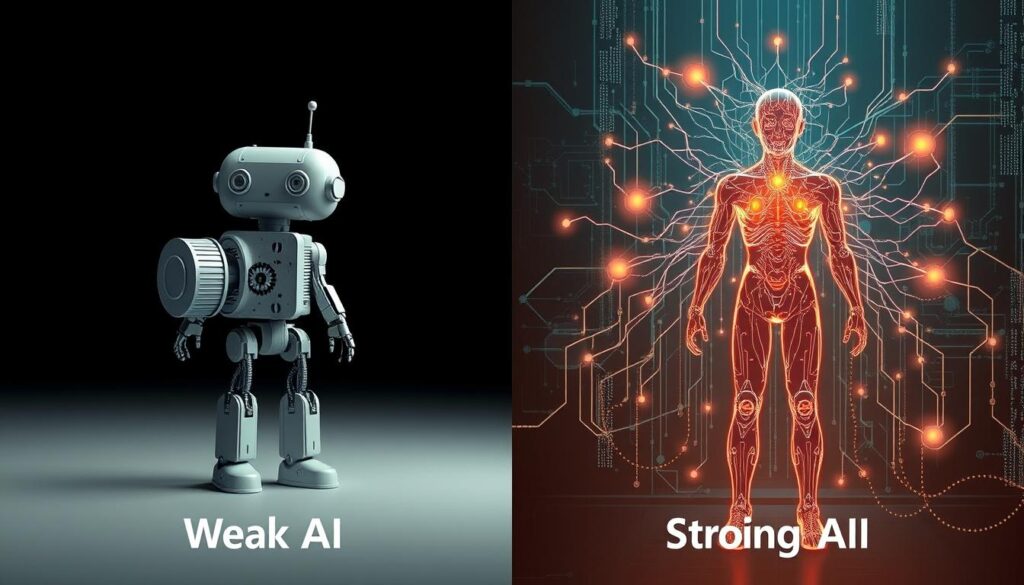
Weak AI, also known as narrow AI, is key in our tech-filled lives. It’s made to do specific tasks really well. Unlike strong AI, weak AI doesn’t think or learn like humans do. It’s great at one thing but can’t do anything else.
Weak AI is good at what it does because of its special traits. These include:
In my day, I see weak AI helping me a lot:
Weak AI is changing many fields for the better:
Learning about weak AI shows how it’s different from strong AI. Its growth shows its big role in our lives and what’s coming next.
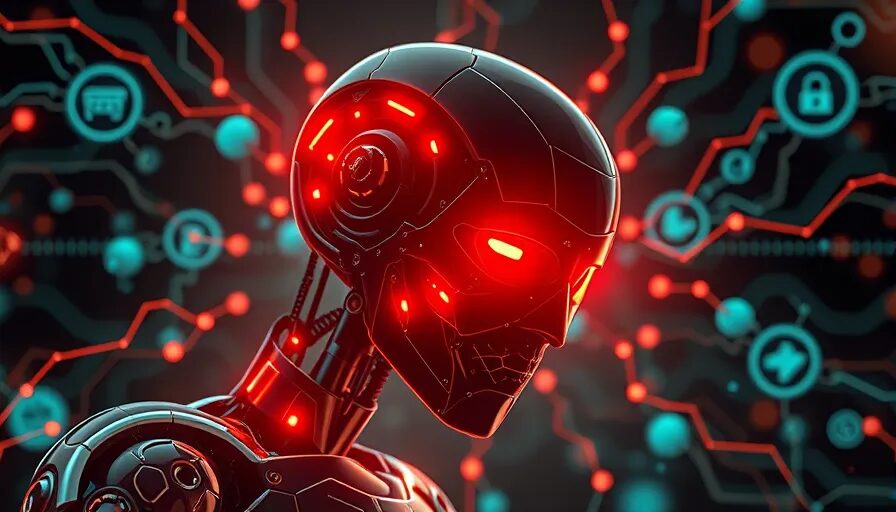
Strong AI, also known as artificial general intelligence (AGI), is a big step forward in artificial intelligence. It can understand, learn, and apply knowledge in many areas, just like humans do. This is different from weak AI, which is good at only one thing.
Strong AI has several key features:
Strong AI ideas often come from movies and books. Characters like Wall-E and A.J. show what AI could do. They can understand human feelings and needs. This shows AI’s potential in areas like security, robotics, and language5.
Strong AI brings up important questions:
The path to strong AI is still in the future, but its impact is exciting. It could change how we use technology. As we move forward, we must think about the good and bad sides of AI6.
Exploring artificial intelligence, we see clear differences between weak AI and strong AI. Weak AI, or narrow AI, is the only AI we have now. It’s great at doing specific tasks but doesn’t think like humans. Siri, Alexa, and Google Search are examples of weak AI we use every day for simple tasks78.
To better understand the differences, here’s a quick comparison:
| Attribute | Weak AI | Strong AI |
|---|---|---|
| Scope & Functionality | Task-specific, narrow focus | General intelligence, wide range |
| Cognitive Abilities | Operates on predefined algorithms | Possesses general cognitive abilities |
| Autonomy | Requires human intervention | Functions autonomously |
| Consciousness | No consciousness or self-awareness | Self-aware and conscious |
Weak AI and strong AI have different abilities and performance levels. Weak AI is good at specific tasks, like helping with medical diagnostics or improving social media. But strong AI is still just a theory, aiming to think and decide like humans78. The future of AI depends on research and innovation to bridge the gap between these two AI types.
Weak AI, or narrow AI, is made to do specific tasks well. It doesn’t understand things in general or think for itself. On the other hand, strong AI, or artificial general intelligence (AGI), tries to think like humans in many different situations.
Sure, weak AI includes smart helpers like Siri and Alexa. It also includes chatbots for customer service and email filters to block spam. These systems are great at what they do but can’t do anything else.
Strong AI could change many areas by making machines understand feelings and right and wrong. But, it might also make jobs harder to find as machines could do more things. There are also worries about fairness, safety, and who gets to control these advanced machines.
Right now, strong AI is mostly just ideas and seen in movies and TV shows. There are lots of possibilities, but we haven’t seen them in real life yet. This leads to a lot of guessing about what it might do in the future.
Weak AI uses machine learning to get better at its job. But strong AI wants to learn, reason, and use knowledge like humans do. It’s about understanding more broadly.
Yes, we need a lot more work to make strong AI a reality. We’re talking about creating machines that can think and act like us, with real intelligence and freedom.
Original Publish Date 8/13/2019 — Updated 10/10/2024